
Designing a Villa That Ages Well: Six Decisions That Matter Most
A villa is one of the largest personal investments most families ever make, and one of the hardest to undo. The decisions that shape how a home feels in twenty years are rarely the finishes. They are made early, on paper, long before the first material is chosen.
Here are the six decisions we believe matter most.
1. Read the site before drawing the house
Orientation, slope, views, prevailing winds and neighbouring buildings should decide where the house sits and how it opens up. A home placed to work with its site needs less mechanical correction, feels calmer, and frames the views that made you buy the land in the first place.
2. Design with light, not just windows
Natural light is the most underrated material in a home. Studying how the sun moves across each room through the day and the seasons lets us place living spaces where light is generous, bedrooms where mornings are gentle, and shade where summer heat arrives. The result is a house that feels bright without overheating.
3. Plan circulation around how you actually live
How you move from the entrance to the kitchen, how guests flow from the living room to the garden, how family life stays private when you entertain: circulation decides whether a house feels effortless or awkward. We map daily routines first, then let the plan follow them.
4. Treat the landscape as part of the architecture
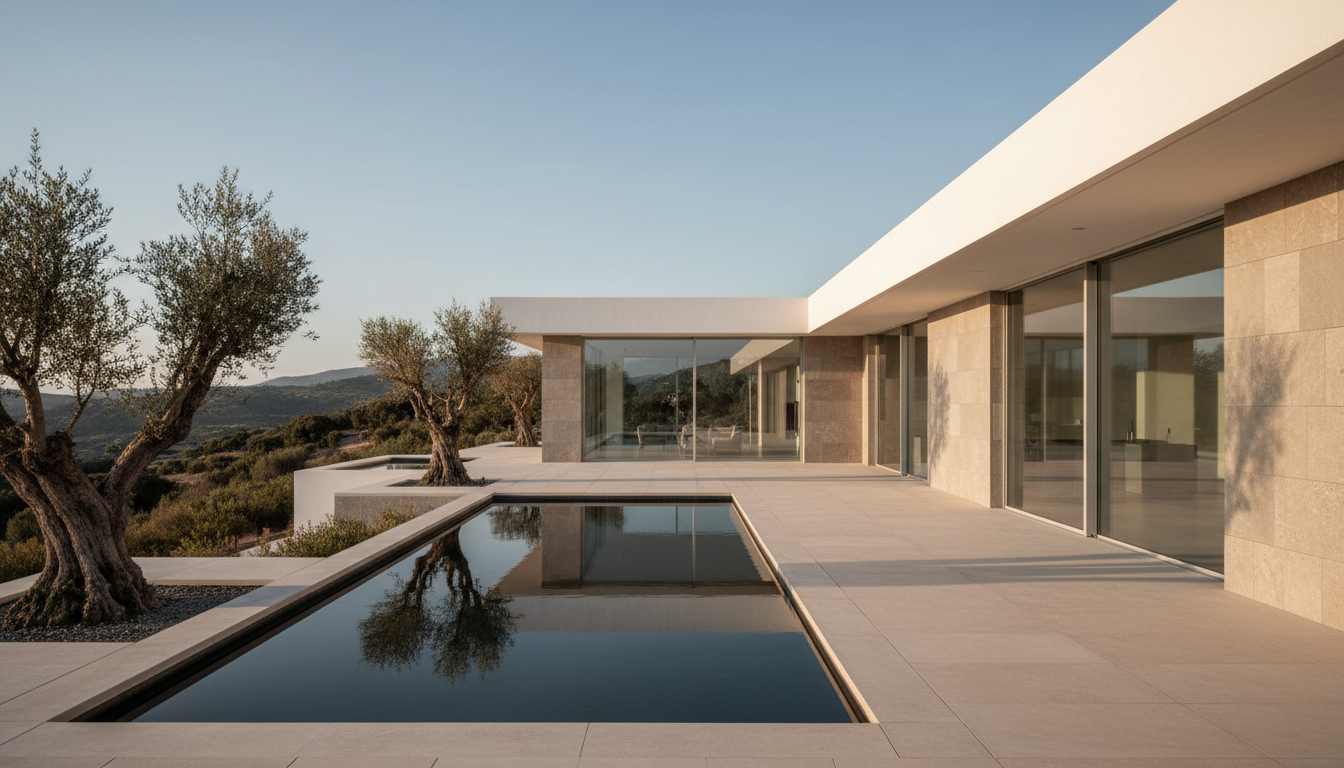
Gardens, terraces and pools work best when they are designed with the house, not added afterwards. Strong integration between inside and outside extends living space, softens the building, and creates the moments you remember most: the first coffee on the terrace, the evening by the water.
5. Choose materials for how they age, not how they photograph
Some materials look striking on day one and tired by year five. Others gain character with time. We weigh durability, maintenance and local climate alongside appearance, so the house keeps its quality with minimal upkeep.
6. Build in room to adapt
Families change. Children grow up, parents move in, work moves home. Flexible rooms, sensible structural grids and services planned for future changes let a villa evolve without major renovation. This is where thinking like a developer pays off for a private client: a home designed to adapt also holds its value.
The common thread
Each of these decisions favours clarity over excess and long-term quality over short-lived trends. Get them right early and every later choice, from finishes to furniture, becomes easier.
Planning a home? See how GBA works with villa owners, or start a conversation with our team.
